Search is changing.
For years, most people have used search engines in a fairly familiar way. They type something into Google, scan the results, click through to a few websites and decide what feels useful.
That still happens, and it still matters. But it is no longer the only way people find information.
Now, someone might ask Google a full question and see an AI-generated answer before they click on anything. They might use ChatGPT, Perplexity, Copilot or another AI tool to compare options, understand a topic, summarise advice or work out what questions they should be asking next.
That changes how businesses need to think about being found online.
AI search does not mean SEO is dead. It means online visibility is becoming broader. Your website still needs to be clear, useful and technically sound, but your content also needs to help people and search systems understand who you are, what you do and why your business can be trusted.
For a business owner, that might mean the difference between being one of the companies people discover during their research, or being left out of the conversation completely.
What do we mean by AI search?
AI search is a broad term for the way artificial intelligence is being used to help people find, understand and compare information online.
Sometimes this happens inside traditional search engines. Google's AI Overviews, for example, can generate a summary at the top of some search results, with links that help people explore the topic further.
Other times, AI search happens through tools like ChatGPT, Perplexity, Copilot or Gemini, where someone asks a question in a more conversational way and receives a generated answer rather than a list of blue links.
A person might not search for "best marketing agency Eastbourne" anymore. They might ask, "What should I look for in a marketing agency for a small business?" or "How do I know if my website needs SEO?" or "What should I ask before paying for social media support?"
That is a different type of search. It is more specific, more conversational and often much closer to the way people actually think when they are trying to make a decision.
The language around this is still developing. You might see people call it AI search optimisation, AI visibility, answer engine optimisation, generative engine optimisation or GEO.
The terms are useful, but the goal is simple. Businesses need to be visible and trusted in the places where people are now looking for answers.
Why does this matter for businesses?
The important shift is not just how people search. It is how they consume the information they find.
Someone might not visit five different websites straight away. They might read an AI-generated summary first. They might ask for a comparison. They might look for the best option for their situation. They might ask what to avoid, what something should cost or what questions they should ask before choosing a provider.
Think about a local homeowner looking for a new resin driveway, a café owner thinking about a new website, or a business trying to understand whether SEO is worth investing in. They may not start with a brand name. They may start with a problem, a concern or a question.
They might ask:
- "What is the best surface for a low-maintenance garden?"
- "How much does a small business website usually cost?"
- "Why is my business not showing up on Google?"
- "What should I look for before choosing an SEO company?"
If the answers they find do not mention your business, reflect your expertise or point people towards your website, you may never even enter the decision-making process.
For businesses, this makes clarity more important. If your website does not explain what you do properly, if your content does not answer useful questions, or if your business has very little authority online, it becomes harder for search engines and AI tools to understand where you fit.
This is especially important for service-based businesses. People are often not just looking for a product. They are looking for confidence. They want to know who understands their problem, who seems credible and who feels like the right fit.
Does AI search replace SEO?
No.
AI search and SEO are closely connected. A lot of the work that supports good SEO also supports AI search visibility.
Clear website structure helps search engines understand your pages. Useful content helps people and search systems understand what you know. Local SEO helps connect your business with the areas you serve. Backlinks, mentions, reviews and other trust signals help build authority around your business.
So the message is not that SEO is being replaced. It is that SEO needs to sit within a wider visibility strategy.
For example, a strong service page can still help you rank for traditional searches. But if that page also explains common customer questions, shows real experience and links to useful supporting content, it becomes more valuable beyond the ranking itself.
It gives people more reason to trust you. It gives search engines more context. It gives AI-led tools more information to understand what your business is relevant for.
The businesses that do this well will not only think about ranking for a handful of keywords. They will think about the questions their audience asks, the comparisons they make, the concerns they have and the content that helps them make a decision.
What does this look like in practice?
For a local business, it might mean making sure your website clearly explains your services, the areas you cover and why people nearby should trust you.
That could be a garden room company creating content around planning permission, pricing, materials and examples of local projects. It could be a café or community venue making sure people can find information about events, bookings, facilities and what makes the space worth visiting. It could be a trades business answering the questions people usually ask before they feel ready to enquire.
For a specialist business, it might mean creating content around the problems your audience is already researching, not just the services you want to sell.
A company working in healthcare, finance, construction or education may need to show that it understands the sector properly. The content should not just say "we offer support". It should help people see that the business understands their specific challenges, priorities and decision-making process.
For a growing business, it might mean using search insight to shape the website, blogs, social media, email marketing and wider campaigns so everything feels more connected.
A blog might answer the question people are already searching for. A social post might make that same idea easier to digest. An email might follow up with a useful resource or case study. The website then becomes the place where all of that activity points back to something clearer and more useful.
This is where AI search becomes more than a technical conversation. It becomes a content and strategy conversation.
If people are asking better questions, your business needs better answers.
What should businesses do now?
The first step is not to panic or start chasing every new AI search term.
Start with the basics.
Make sure your website clearly explains what your business does, who it helps and where it works. Look at the questions your customers already ask before they enquire. Review whether your service pages are useful enough. Think about whether your content helps people understand their options, not just your offer.
For example, a service page that only lists what you do may not be enough anymore. A better page might explain who the service is for, what problem it solves, what the process looks like, what affects the cost and what someone should consider before choosing a provider.
Then look wider.
Are other websites mentioning your business? Are your reviews clear and consistent? Does your content show real experience? Are you building authority in the areas you want to be known for?
These things already matter for SEO. As search becomes more AI-led, they are likely to matter even more.
How EDP is approaching AI search
At EDP, we see AI search as a natural extension of SEO, content and digital strategy.
We are already using search insight to understand what people are looking for, what questions they are asking and where businesses have opportunities to become more visible and trusted online.
That insight can shape website structure, service page copy, blog content, social media campaigns, email marketing and reporting. It helps make the work more focused, because it is guided by what people are actually searching for and how they are making decisions.
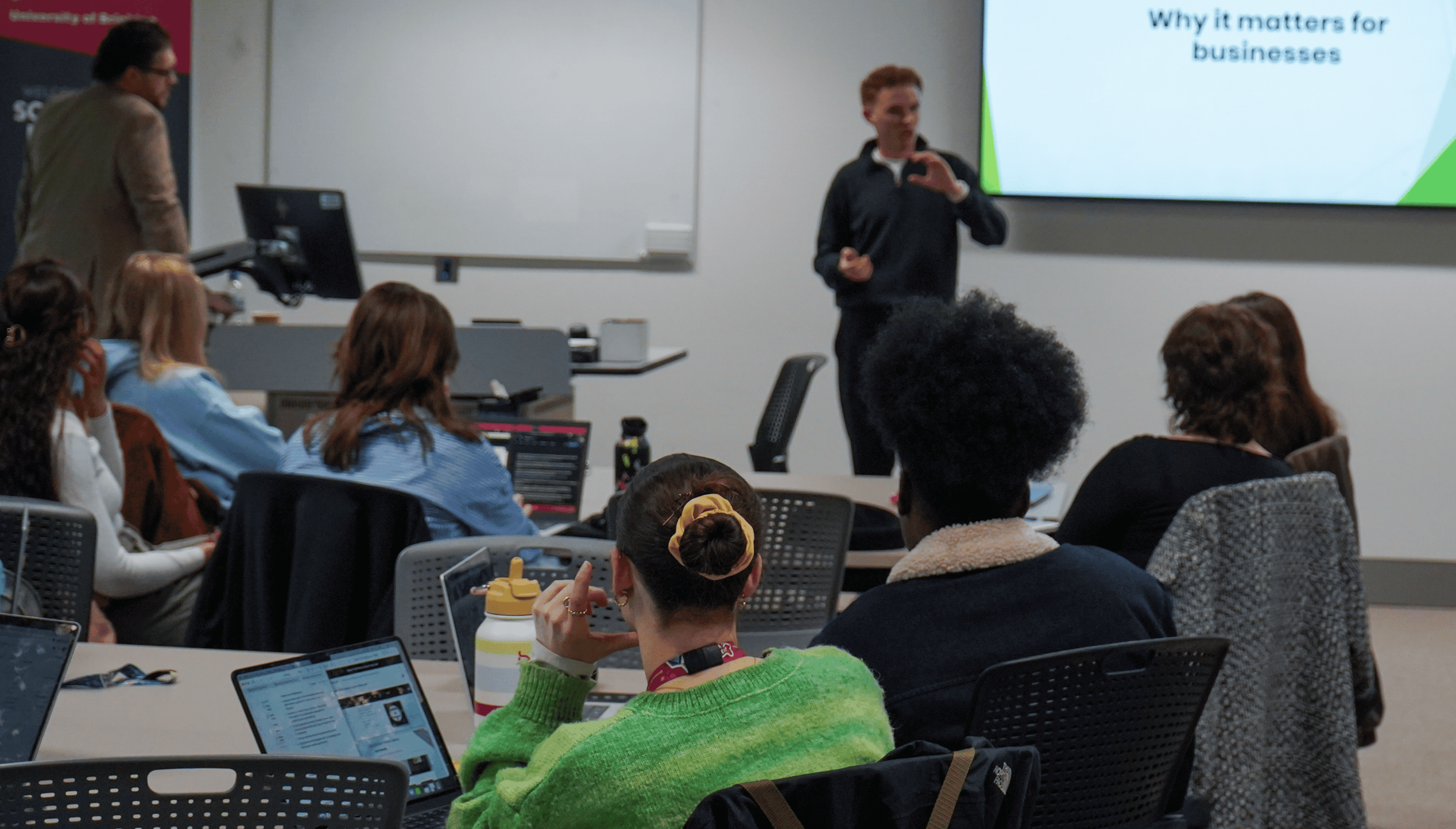
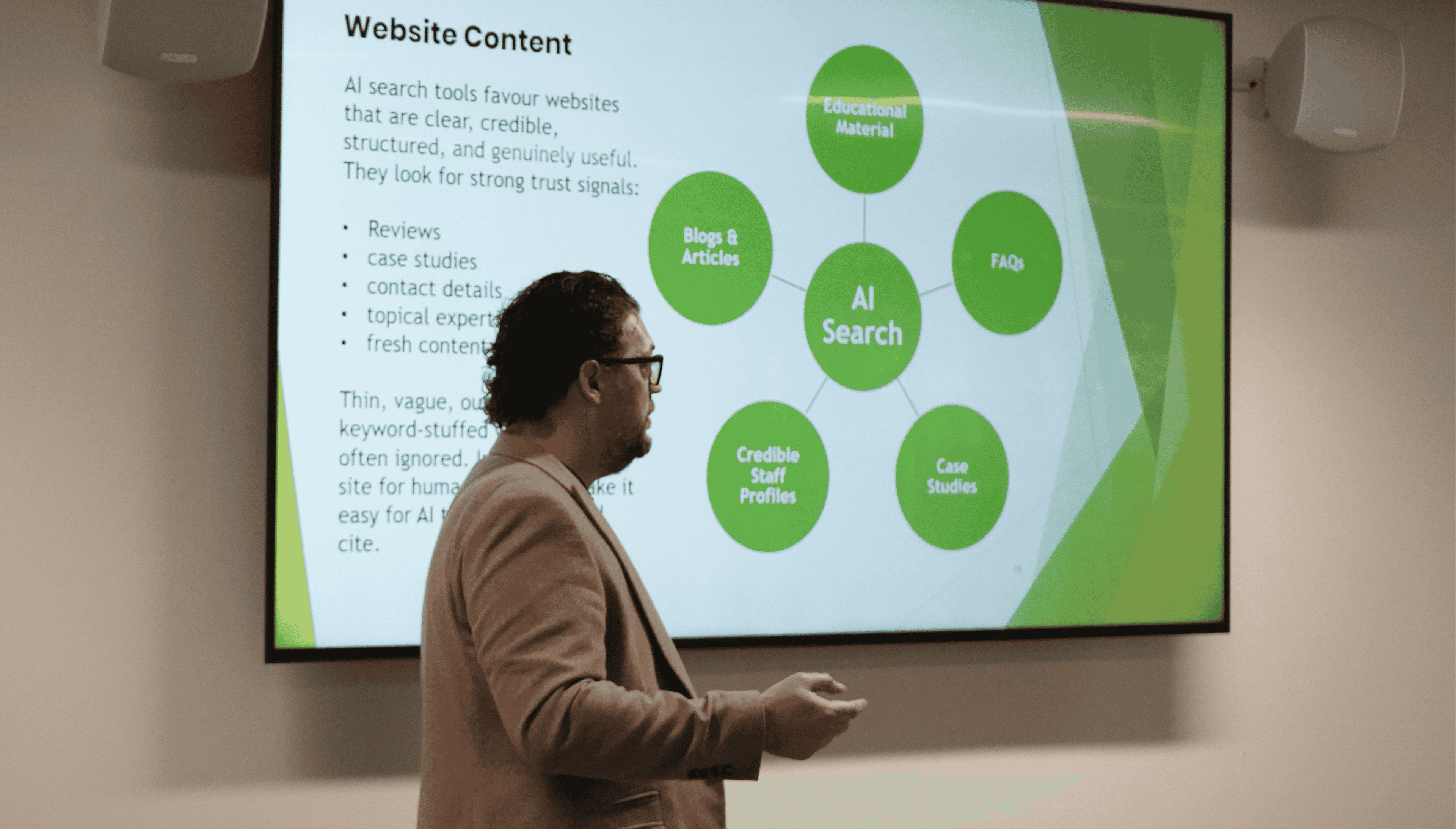
This is something we have been exploring in more depth through our own work, our client projects and recent conversations around AI search and SEO, including our guest lecture at the University of Brighton and upcoming Eastbourne Chamber of Commerce talk.
AI search is still developing, and the language around it will continue to change. But the direction is clear. Businesses need to be easier to find, easier to understand and easier to trust across more places than before.
That starts with strong SEO foundations, useful content and a clear strategy for how your business shows up online.
Frequently asked questions
No. AI search and SEO are closely connected, and much of the work that supports good SEO also supports AI search visibility. SEO simply needs to sit within a wider visibility strategy rather than focusing on rankings alone.
Want a hand with this?
We help businesses across Eastbourne and East Sussex turn this kind of thinking into real results.
Start a conversation